
Boat Careening in the Mediterranean: Hull Maintenance, Antifouling and Essential Tips
On the calm shores of the Étang de Berre, in the heart of Provence and close to the Mediterranean, boat owners know that enjoying their vessel also means taking care of it throughout the year. Boat careening in the Mediterranean is an essential part of regular maintenance, particularly for vessels that spend long periods in the water. Hull cleaning, inspection and antifouling all help preserve the condition, efficiency and longevity of your boat.
From understanding how often maintenance should be carried out to choosing the right antifouling treatment, here is what boat owners need to know about hull maintenance, protection against marine growth and maintaining optimal boat performance throughout the season.
Why Is Boat Careening Essential?
Water naturally contains many organisms that can attach themselves to a boat's hull. Over time, algae, barnacles, shellfish and other marine growth create additional drag, which can reduce speed, increase fuel consumption and affect overall boat performance. Even experienced boat owners can be surprised by how much difference a clean hull makes when underway.
Neglecting boat careening can therefore lead to a number of problems, including reduced performance, premature corrosion and deterioration of underwater components. Regular hull maintenance helps protect the vessel and provides greater peace of mind every time you leave the marina.
When and How Often Should a Boat Be Careened?
The ideal boat careening frequency depends on several factors, including how the vessel is used, the hull material and how long it remains in the water. In the Mediterranean, many boat owners schedule this maintenance before the start of the main boating season so that their vessel is ready for spring and summer.
For a boat kept permanently afloat, a thorough hull cleaning and inspection is generally recommended at least once a year. Older vessels or boats exposed to conditions that encourage marine growth may require more frequent maintenance. Advice from local marine professionals familiar with the Étang de Berre and Mediterranean conditions can help determine the most appropriate schedule.
Signs That Your Boat Needs Hull Maintenance
Several warning signs may indicate that it is time to haul out your boat and inspect the hull. A noticeable loss of speed, unusual fuel consumption or visible marine growth below the waterline are all good reasons to arrange boat careening.
Unusual vibrations or changes in handling can also indicate fouling or a problem with underwater components. Inspecting the vessel out of the water makes it possible to identify the cause and deal with potential issues before they develop into more expensive repairs.
How Does the Mooring Location Affect Careening Frequency?
Local conditions have a direct impact on hull maintenance. On the Étang de Berre, the particular characteristics of the water and the local environment mean that boat owners should regularly monitor the condition of their hulls and underwater equipment.
Elsewhere in the Mediterranean, salinity, water temperature and the level of marine growth can influence how frequently antifouling needs to be renewed. Consulting a local boatyard or marine maintenance specialist is therefore the best way to choose a maintenance schedule and treatment suited to your cruising area.
Boat Careening Steps: From Haul-Out to Relaunching
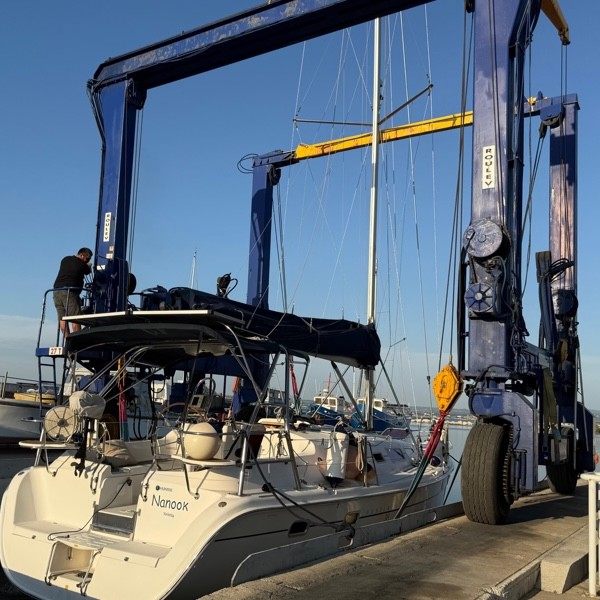
The process begins with hauling the boat out of the water. This operation should be carried out using equipment suited to the size and weight of the vessel. Professional handling ensures the boat can be lifted, moved and positioned safely before maintenance work begins.
Once ashore, the hull can be thoroughly cleaned, often using pressure washing equipment to remove algae, marine growth and other deposits. With the hull clean, technicians can inspect the underwater surfaces and identify damaged coatings, corrosion, cracks or other areas requiring attention.
Hull Sanding and Repairs
Once the hull is clean and dry, the surface can be prepared for treatment. Sanding removes deteriorated or loose layers of old antifouling and provides a suitable surface for the new coating.
Any scratches, impacts or damaged areas can also be repaired at this stage. Particular attention may be required around vulnerable areas such as the keel, transom and underwater fittings. Proper preparation improves the durability of the treatment and helps maintain effective hull protection.
Applying Antifouling and Protecting the Hull Against Marine Growth
The application of antifouling paint is one of the key stages of boat careening. This specialized coating is designed to limit the attachment and development of algae, barnacles and other marine organisms on the underwater part of the hull.
Different types of antifouling are available, including hard and self-polishing formulations. The right solution depends on factors such as boat speed, frequency of use, hull material and local water conditions.
Careful application provides effective protection throughout the boating season. Environmental considerations are also increasingly important, making it essential to use suitable products and carry out maintenance in facilities designed to manage residues and wastewater responsibly.
How Much Does Boat Careening Cost?
The cost of boat careening varies according to several factors. Vessel length and size are important, but the overall condition of the hull, the amount of preparation required and the type of antifouling treatment selected will also influence the final price.
A straightforward pressure wash followed by antifouling application will naturally cost less than extensive work involving sanding, surface preparation and hull repairs. Haul-out, relaunching and the time spent ashore should also be considered when estimating the overall maintenance budget.
The Benefits of Personalized Service at a Private Marina
Choosing a private marina with technical facilities can make the entire maintenance process easier to organize. Personalized support allows each operation to be adapted to the vessel's dimensions, condition and specific requirements.
Having boat handling and maintenance facilities in the same location also simplifies logistics. Haul-out, temporary storage ashore, hull work and relaunching can be coordinated more efficiently, reducing unnecessary movements and making it easier for owners to plan their maintenance schedule.
Planning Ahead to Control Boat Careening Costs
Boat careening should be included in the vessel's annual maintenance budget from the outset. Planning the work in advance helps owners choose the right time of year and avoid the busiest periods immediately before the summer boating season.
Regular inspections can also help control long-term costs. Identifying minor damage early is generally preferable to waiting until more extensive repairs are required.
Boat Careening and Improved Performance
A well-maintained hull can make a noticeable difference to a boat's performance. Marine growth increases hydrodynamic drag, meaning the engine has to work harder to maintain the same speed. Keeping the underwater surfaces clean helps the vessel move through the water more efficiently.
After hull cleaning and antifouling, boat owners may notice improved acceleration, more responsive handling and better fuel efficiency. Regular hull maintenance therefore contributes not only to protecting the vessel but also to maintaining an enjoyable and efficient boating experience.
Choosing the Right Antifouling for Long-Lasting Protection
The choice of antifouling has a direct impact on how effectively the hull remains protected. The right product should be selected according to the vessel, its cruising speed, how frequently it is used and the waters in which it operates.
A boat used regularly throughout the Mediterranean season may have different requirements from a vessel that spends long periods at its berth. Professional advice can help determine the most suitable treatment and application schedule for each situation.
How Does a Clean Hull Affect Your Boating Experience?
Even a relatively thin layer of marine growth can affect speed, handling and fuel consumption. Maintaining an appropriate hull cleaning and antifouling schedule helps preserve the vessel's efficiency and ensures it remains ready for cruising throughout the season.
Ultimately, regular boat careening and hull maintenance protect your investment while helping you enjoy better performance and greater peace of mind on the water. With proper cleaning, inspection and antifouling, your boat will be ready to make the most of every Mediterranean boating season.